
Lab-Grown Diamonds vs Moissanite Chicago: Expert Comparison Guide
Posted by Koorosh Daneshgar on Aug 17th 2024

Lab-Grown Diamonds vs. Moissanite Chicago: Expert Comparison from Local Jewelers
Choosing your center stone is one of the most important decisions you’ll make when searching for an “engagement ring near me” or visiting jewelry stores in Chicago. At Wedding Bands & Co., we’ve helped more than 10,000 couples understand the differences between lab-grown diamonds and moissanite, ensuring they make an informed and confident decision.
Both stones offer affordability compared to natural diamonds, but their characteristics, appearance, and long-term value differ significantly. Below is a clear, comprehensive guide created by our custom jewelers to help you understand the essential distinctions.
Understanding Lab-Grown Diamonds
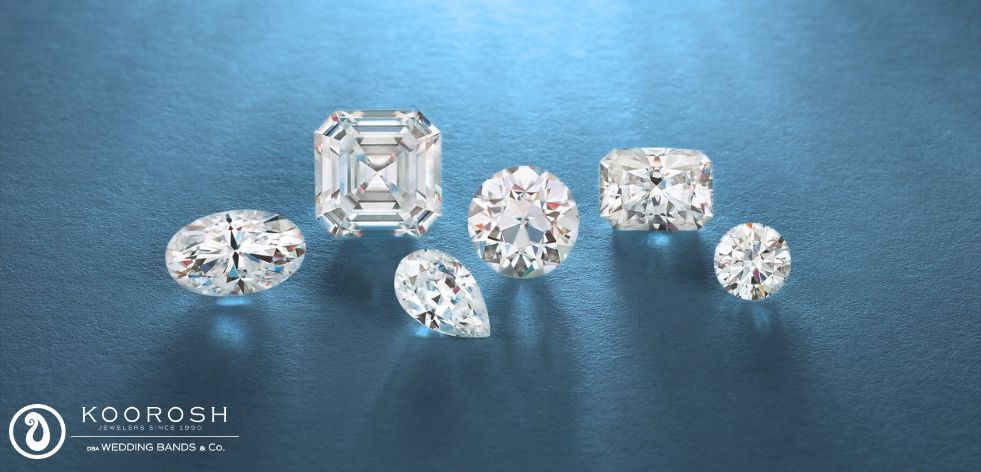
Lab-grown diamonds (also called lab-created or cultured diamonds) are real diamonds produced in controlled laboratory environments rather than mined from the earth. They possess the same chemical, physical, and optical properties as natural diamonds.
What Makes Lab-Grown Diamonds Real Diamonds
- 100% pure carbon crystal structure
- Identical brilliance, fire, and scintillation
- Same durability (Mohs hardness 10)
- Same density, thermal conductivity, and optical behavior
- Cannot be distinguished from natural diamonds with the naked eye
- Require advanced gemological equipment for identification
Advantages of Lab-Grown Diamonds
During our engagement ring consultations, couples often choose lab-grown diamonds for the following reasons:
- Available in top color grades (D–F)
- Exceptional clarity, often VVS or IF
- Excellent cut quality for maximum sparkle
- Highest durability of any gemstone
- More affordable than mined diamonds, allowing for larger sizes or more elaborate settings
- Eco-conscious choice with full supply chain transparency
Understanding Moissanite
Moissanite is a different gemstone entirely, made of silicon carbide (SiC). Originally discovered in a meteor crater in 1893, all modern moissanite is lab-created.
Moissanite Characteristics
- Chemical composition: silicon carbide, not carbon
- Mohs hardness: 9.25 (durable but not diamond-hard)
- Higher refractive index, creating a stronger rainbow sparkle
- Distinct visual characteristics compared to diamonds
The Moissanite Reality
Clients often notice:
- Yellow, green, or gray undertones especially over 1 carat
- A strong “rainbow,” flashy sparkle that can appear artificial
- Lower social and symbolic value compared to diamonds
- Resale value that is significantly lower
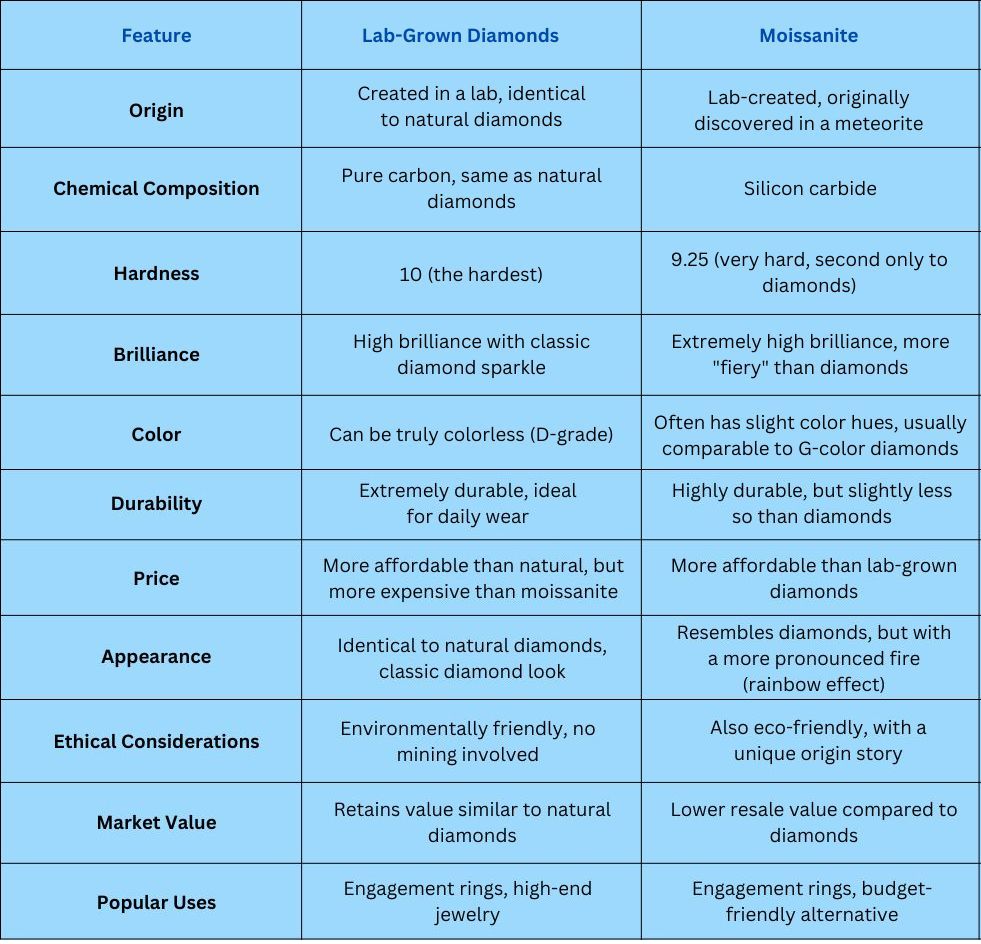
Lab-Grown Diamonds vs. Moissanite: Side-by-Side Comparison
Our jewelers present both stones under proper lighting so you can see the differences clearly. Here is how they compare:
-
Appearance & Sparkle
Lab-Grown Diamonds
- Classic diamond brilliance
- Balanced white light and fire
- True colorless options
- Elegant, timeless sparkle
- Visually identical to mined diamonds
Moissanite
- Strong rainbow sparkle (“fire”) that can appear overly intense
- Noticeable undertones, especially in larger sizes
- Distinct visual identity does not look like a diamond
-
Durability & Wearability
Lab-Grown Diamonds
- Mohs hardness: 10
- Most scratch-resistant material on earth
- Maintains its beauty forever
- Ideal for lifelong daily wear
Moissanite
- Mohs hardness: 9.25
- Very durable but can be scratched
- May show wear over decades
- Durable, but not diamond-level durability
-
Value & Investment
Lab-Grown Diamonds
- Retain value better than moissanite
- Recognized universally as real diamonds
- Certified by GIA, IGI, and GCAL
- Increasingly accepted and valued in the engagement ring market
Moissanite
- 60–70% cheaper upfront
- Very low long-term resale value
- Not recognized as a diamond
- Lower investment potential
-
Color & Clarity
Lab-Grown Diamonds
- Available in the full D–Z color range
- True colorless (D–F) options
- Full clarity range, from FL to I3
- Professionally certified
Moissanite
- Limited color options
- “Colorless” stones still show undertones
- Eye-clean, but not graded like diamonds
Real Price Comparison From Our Chicago Store
1-Carat Stones (Excellent Cut & Quality)
- Lab-grown diamond (E color, VS1): $1,000–$1,500
- Colorless moissanite: $400–$600
- Natural diamond (E color, VS1): $5,000–$8,000
2-Carat Stones
- Lab-grown diamond (F color, VS1): $3,500–$5,000
- Colorless moissanite: $800–$1,200
- Natural diamond (F color, VS1): $20,000–$35,000
Lab-grown diamonds offer far superior value while still giving you the beauty and recognition of a real diamond.
Which Stone Should You Choose?
Choose Lab-Grown Diamonds If You Want:
- A real diamond with the same characteristics as mined diamonds
- True colorless beauty
- Timeless diamond sparkle
- Maximum durability
- A stone recognized worldwide as a diamond
- Certification (GIA, IGI)
- Better long-term value
- A higher-quality ring while staying within budget
This is why 95%+ of couples in our showroom choose lab-grown diamonds after comparing them in person.
Choose Moissanite If You Want:
- The lowest possible price
- A larger stone for minimal cost
- You don’t mind a different sparkle pattern
- You accept slight color undertones
- You are okay knowing it is not a diamond
- Budget is the top priority
Moissanite is best for those who want size over authenticity.
Why Chicago Couples Prefer Lab-Grown Diamonds
Over the years, our Chicago clients consistently choose lab-grown diamonds because they offer:
- Authentic diamond status
- True colorless beauty
- Classic brilliance, not a rainbow flash
- Better value retention
- Professional certification
- Ideal durability for lifelong wear
View Lab-Grown Diamonds & Moissanite Side by Side
At our Chicago showroom, you can compare both stones under proper lighting:
- Side-by-side appearance comparison
- Sparkle and color differences
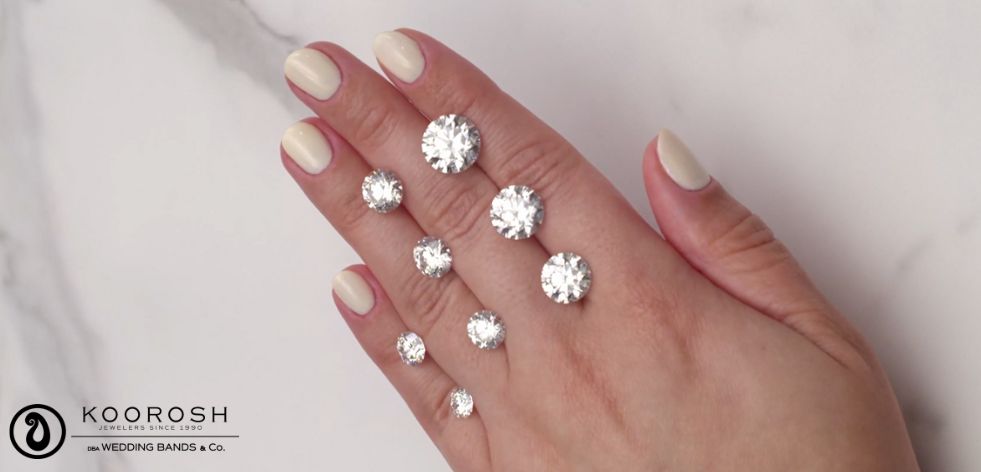
- Size comparisons within your budget
- Matching stone shapes and settings
- Expert guidance from our GIA Graduate Gemologist
Seeing them in person reveals their differences instantly.
Our Professional Recommendation
Our team designers of more than 10,000 engagement rings recommends lab-grown diamonds for most couples.
They provide:
- The beauty and authenticity of real diamonds
- Superior durability
- Better long-term value
- Certification
- A more elegant, classic appearance
- A small price difference compared to moissanite
For engagement rings, lab-grown diamonds offer the best balance of beauty, durability, recognition, and value.
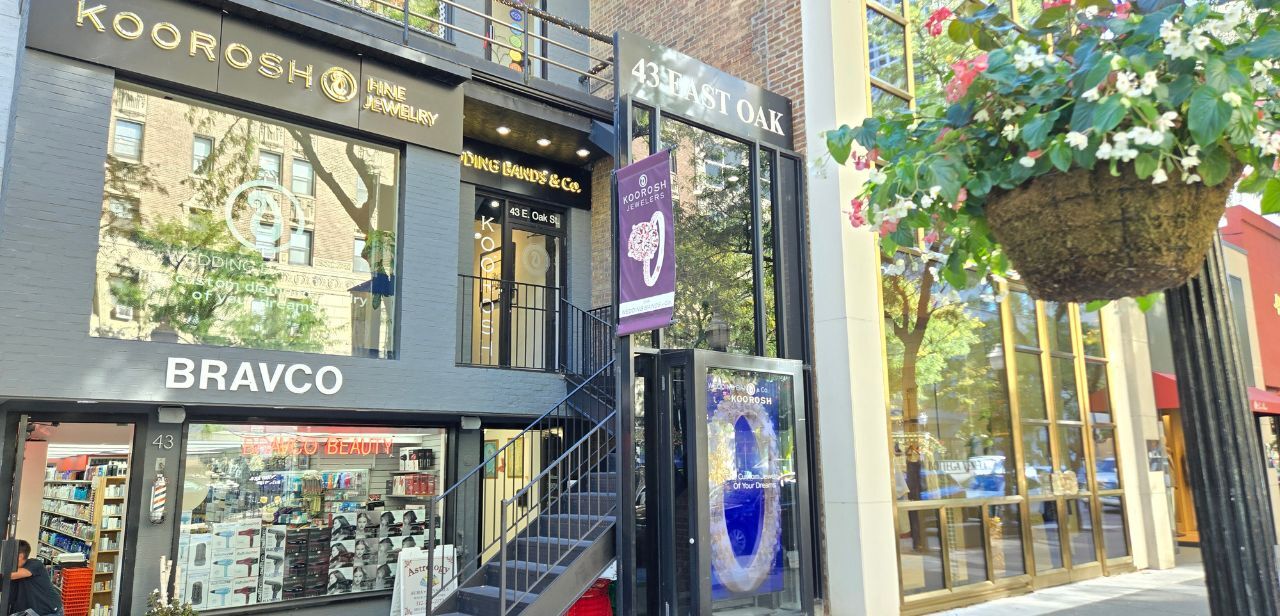
Visit Our Chicago Jewelry Store
You’re invited to explore both stones in person at our Gold Coast location:
Wedding Bands & Co.
43 East Oak Street, 2nd Floor Chicago, IL 60611
+13129200726
info@weddingbandscompany.com
Schedule Your Comparison Consultation
During your appointment, you can:
- Examine lab-grown diamonds and moissanite up close
- Learn from our GIA Graduate Gemologist
- Compare sparkle, color, and performance
- Explore custom engagement ring designs
- Receive transparent, pressure-free guidance
- Understand real pricing and value differences
Final Thoughts: Choosing Your Forever Stone
Your center stone defines the beauty, symbolism, and longevity of your engagement ring. Lab-grown diamonds provide couples with the opportunity to enjoy authentic diamond luxury at prices that were once out of reach.
Our team at Wedding Bands & Co. is here to help you choose the stone that best matches your vision, values, and budget.
See lab-grown diamonds vs. moissanite in person by booking your complimentary consultation today.
By: Koorosh Daneshgar CEO/Design Chief